SAFETY & COMPLIANCE
Waste & Data for Reconciliation
Waste Is No Longer Just Disposal
Overview
The Waste Step Has Become a Visibility Challenge
For years, medication safety efforts in the operating room focused primarily on preparation and administration.
Controlled substance waste remains one of the most variable and manually reconstructed steps in the perioperative workflow.
At the end of a case, anesthesia providers often document waste while transitioning between patients, completing charting, and/or preparing for the next procedure. Pharmacy teams may later need to reconcile prepared, administered, and wasted volumes using information collected across multiple systems and manual records.
The result:
- fragmented workflows
- inconsistent documentation
- delayed reconciliation
- reduced visibility into waste activity
- increased administrative burden for both anesthesia and pharmacy
- delayed or incomplete billing
- greater difficulty investigating discrepancies
As hospitals strengthen controlled substance oversight programs in alignment with DEA regulations, waste and reconciliation workflows are receiving greater attention across the perioperative environment.
A More Connected Workflow
Codonics has long supported medication safety in the operating room through barcode-verified medication labeling and workflow standardization.
Today, healthcare organizations are increasingly looking beyond labeling alone — toward greater continuity across:
Preparation → Administration → Waste & Reconciliation
This evolution reflects a broader industry shift:
from disconnected steps… to connected workflow visibility.
As discussed in recent anesthesia industry conversations and evolving American Society of Health-System Pharmacists (ASHP) guidance, waste is increasingly recognized as a high-risk and operationally difficult step within the medication-use process.
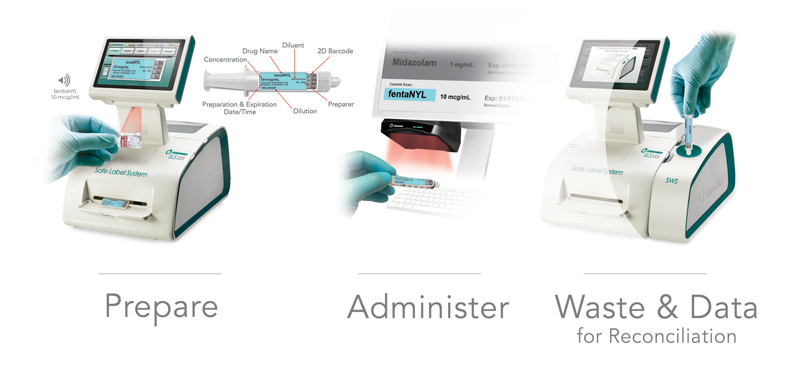
Historically, preparation, administration, and waste existed as disconnected steps. Increasingly, healthcare organizations are looking for greater continuity and visibility across the entire perioperative medication workflow.
Bringing Structure to the Waste Step
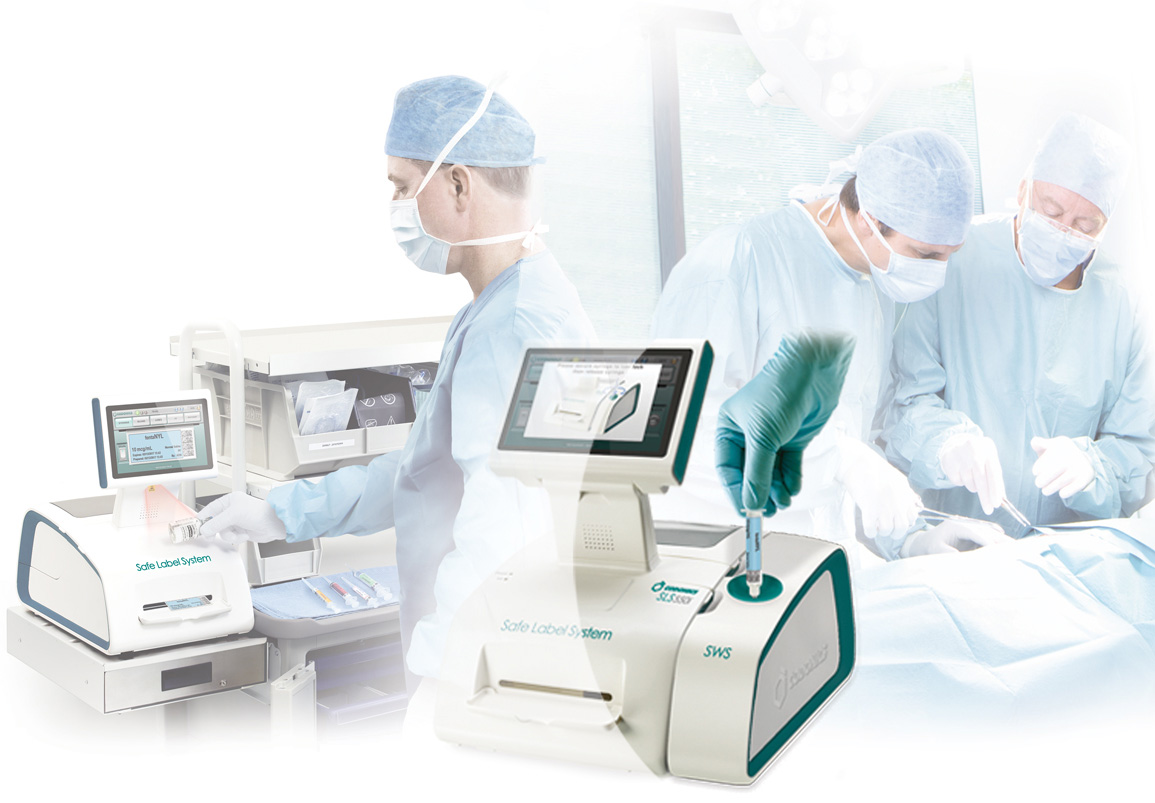
The Codonics Safe Waste System™ (SWS) is designed to bring structure, measurement, and documentation to clear liquid controlled substance waste at the point of care.
SWS supports:
- identification
- measurement
- spectrophotometric analysis
- rendering liquid controlled substance waste non-retrievable
- witness documentation
- record/reporting workflows
—all performed as part of the clinical workflow at the point of care.
By capturing objective, structured waste event data at the point of care, SWS helps reduce reliance on post-case reconstruction and manual reconciliation processes.
Designed to Support Pharmacy Visibility & Reconciliation
SWS, in conjunction with the Safe Label System, is designed to support:
- structured waste documentation
- reconciliation workflows
- pharmacy review processes
- audit readiness
- controlled substance oversight programs
Captured data will include:
- drug identification and concentration
- measured volume
- spectrophotometric assay results
- time-stamped waste records
- waster and witness information
This structured documentation supports review and reconciliation workflows across preparation, administration, and waste activities.
Supporting Existing Waste Assay Workflows
Codonics Safe Label System® (SLS) syringe labels contain machine-readable barcode data that can be used with select third-party waste assay and diversion monitoring systems, including WasteLog™.
Integration helps reduce manual data entry and supports more efficient pharmacy workflows through electronic identification of prepared medications during waste handling.
This capability enables healthcare organizations to leverage the barcode applied during medication preparation across downstream waste and reconciliation workflows.
While traditional waste assay workflows often occur outside the operating room, SWS is designed to support structured waste documentation at the point of care as part of the perioperative workflow.
Why This Matters
Waste documentation often occurs at one of the busiest moments in the perioperative workflow. When documentation is delayed or reconstructed later:
- workflow variability increases
- reconciliation becomes more labor intensive
- pharmacy visibility may be delayed
- investigations require greater manual effort
SWS is designed to help make the correct process part of the workflow — bringing structure and documentation to the waste step before the provider leaves the room
– making it easy to do the right thing.
Aligned with Evolving Controlled Substance Oversight Practices
The American Society of Health-System Pharmacists (ASHP) identifies waste and disposal activities as high-risk steps within controlled substance management workflows.
ASHP guidance emphasizes:
- monitoring
- documentation
- chain of custody
- reconciliation
- investigation workflows
- technology-supported oversight programs
SWS is designed to support these workflows by bringing structured, objective waste event data to the point of care.
SWS Supports:
- Structured waste documentation
- Witnessed waste workflows
- Point-of-care data capture
- Reconciliation support
- Audit-ready records
- Objective measurement and assay data
- Technology-enabled monitoring workflows
Supporting ASHP-Aligned Waste & Reconciliation Workflows
ASHP guidelines identify waste and disposal as a high-risk point within controlled substance management workflows.
The Codonics Safe Waste System™ (SWS) is designed to bring structure to this step at the point of care—enabling identification, measurement, and spectrophotometric analysis of clear liquid controlled substance waste, along with documentation of each waste event.
By capturing objective data—including volume, assay results, and required witness information—SWS supports monitoring, documentation, and reconciliation workflows in alignment with ASHP diversion prevention guidance.
The resulting data provides a meaningful input to diversion monitoring and analytics programs, helping health systems strengthen accountability and documentation across the medication-use process.
| ASHP Workflow Focus | How SWS Supports the Workflow | Operational Value |
|---|---|---|
| Waste & Disposal Handling | Captures structured waste event data at the point of care | Reduces reliance on post-case reconstruction |
| Monitoring & Surveillance | Records objective measurement and assay data | Improves visibility into waste activity |
| Documentation & Chain of Custody | Documents waste events with witness information | Supports audit readiness and review workflows |
| Reconciliation & Investigation | Provides structured data for reconciliation workflows | Simplifies discrepancy review |
| Technology & Analytics | Generates measurable workflow data | Supports broader monitoring and analytics programs |

Safe Waste System™ is FDA listed, Class I Exempt. Expected release is Q4 2026.
Safety and Compliance Benefits